Mancos CO Ranch Land Buying Guide for Smart Acreage Buyers
Buying acreage near Mancos can feel like a dream until the fine print starts to matter. A beautiful parcel may look perfect at first glance, but questions about water rights, legal access, road maintenance, and zoning can shape what you can actually do with the land. If you want to buy with confidence, you need more than a quick showing and a survey map. You need a clear process. Let’s dive in.
When you buy rural land in Colorado, water should be your first due-diligence item. Colorado follows the doctrine of prior appropriation, which means water rights are property interests that can be separate from the land itself. In practical terms, you cannot assume that water near the property, or even water mentioned in a listing, automatically transfers with the sale. According to the Colorado water policy handbook, the key question is what rights actually attach to the parcel and how senior those rights are.
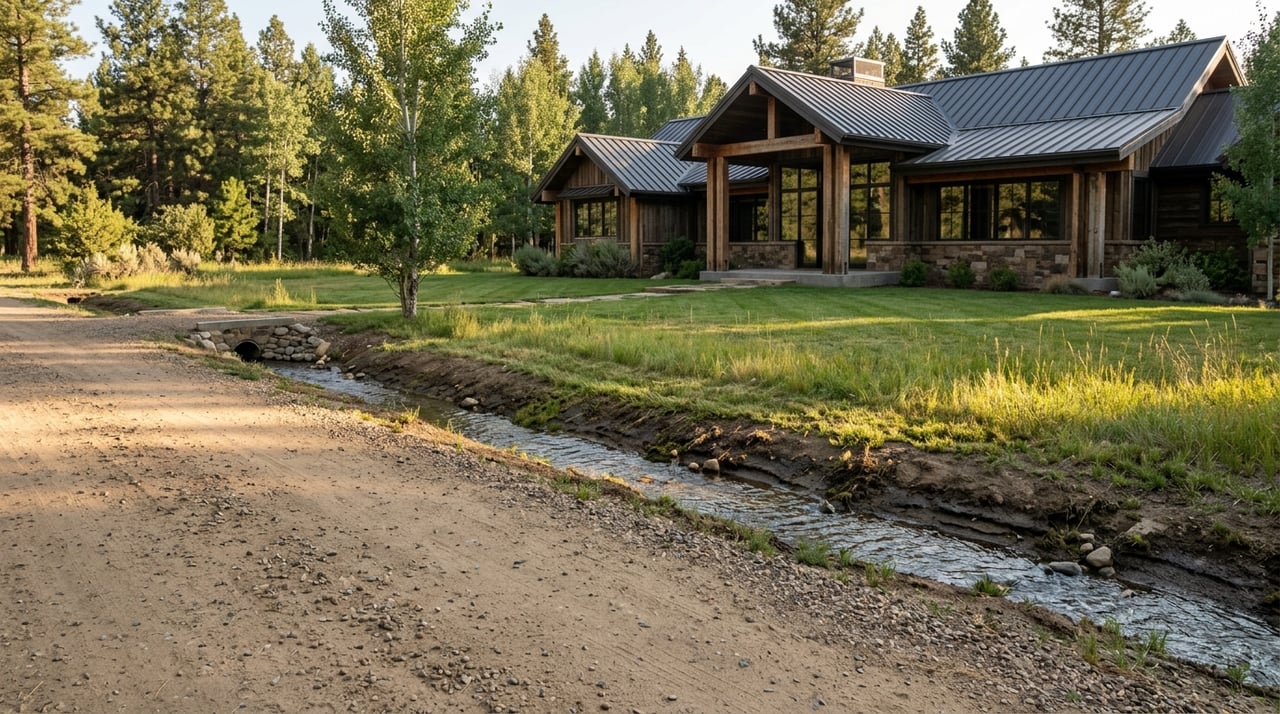
That matters around Mancos, where irrigation is still a major part of the landscape. The Mancos Conservation District works with landowners on water distribution and irrigation systems, and irrigation systems in the area may involve ditch shares or seasonal allocations rather than a simple, unlimited water source. If a property advertises irrigation water, you should verify how that water is delivered, when it is available, and whether the delivery point works for your intended use.
A rural parcel may have a domestic well, irrigation shares, both, or neither. The Colorado Division of Water Resources recommends confirming the exact source and legal basis for water use. That distinction can affect everything from gardening plans to livestock use to future improvements.
If the property has a private well, ask for the well permit number right away. The DWR explains that well permit files include allowable uses and construction records, and in many parts of Colorado, expanded uses such as lawn and garden irrigation, domestic animals, or subdivision activity may require an augmentation plan. In other words, a well may exist, but its permitted uses may be narrower than you expect.
Water quantity is only part of the picture. Water quality matters too, especially if you are buying a property with a private well. The Colorado Department of Public Health and Environment recommends testing private well water, which gives you a clearer picture before closing.
A simple rule for acreage buyers is this: do not rely on assumptions. Ask for the deed, any ditch-share or irrigation documents, the well permit file, and any water-court decree or change-of-use history tied to the property.
Acreage buyers often focus on views, topography, and building sites. Just as important is how you legally and practically get to the property. In Montezuma County, the difference between a county road, a private road, and a recorded easement can affect maintenance, winter travel, and even service access.
According to Montezuma County road guidelines, private roads may be created by prescriptive use, a recorded easement, or plat dedication. The county does not maintain private roads, and it does not regulate utilities on them. The county also notes that use of private roads by emergency, postal, and school services must be arranged by the owner with the proper agency.
This is one of the most important questions you can ask before making an offer. If the parcel is served by a private road, ask whether there is a recorded road-maintenance agreement and who handles grading, snow removal, and repairs after storms. If there is no clear agreement, ownership costs and access headaches can become your problem very quickly.
Even for county-road access, there are rules. Montezuma County requires an access permit before constructing a driveway onto a county road, and the applicant is responsible for issues like snow, ice, sleet, and brush that affect visibility at the access point. That means future driveway work may involve more than just choosing a location on the map.
One of the most useful early tools is the county’s GIS mapping system. It includes parcel, road, address, zoning, floodplain, soils, and terrain data. It can help you identify obvious red flags before you spend time and money on deeper due diligence.
That said, the county warns that not every road shown in its data is county-owned or county-maintained. So GIS is a strong starting point, not a final answer. If possible, drive the route in daylight, after dark, and in poor weather conditions so you understand what access really looks like.
Road access is not just a convenience issue. It also plays a role in safety and emergency response. Montezuma County’s Community Wildfire Protection Plan classifies roads by condition and notes that many red roads are private driveways, with road connections important for mitigation work and fire suppression.
If you are considering a more remote parcel near Mancos, access should be evaluated as a daily-living issue and a long-term ownership issue. A scenic setting is valuable, but so is knowing how you, your guests, and emergency services get in and out.
Acreage often invites big ideas. You may be thinking about building a home, adding agricultural uses, keeping animals, or splitting the property later. Before you assume any of that is possible, verify zoning.
The Montezuma County Land Use Code applies to unincorporated land in the county and states that changing the use of land or subdividing property must comply with the code. Marketing language is not enough. You need the parcel’s exact zoning designation and a clear understanding of whether your intended use is allowed by right, conditional, or subject to additional review.
Montezuma County uses agricultural/residential zoning categories with different minimum parcel sizes. The Land Use Code identifies A/R 35+ for parcels of 35 acres or more, A/R 10-34 as a 10-acre minimum district, and A/R 3-9 as a 3-acre minimum district. These districts generally allow agricultural and residential uses by right, while some non-agricultural uses may trigger threshold standards or more review.
For larger agricultural parcels, clustered development concepts in A/R 35+ can require 75% of the site to remain in agricultural production or open space. In smaller A/R zones, threshold standards can include roads and access, fencing, parking, health and safety, and nuisance impacts. So if you are buying with a long-range plan, zoning is not a box to check at the end. It is part of the initial decision.
If the property is in town or near town, the analysis may be different. The Town of Mancos planning and zoning page notes that the town has its own zoning classifications, and its Three-Mile Plan describes an area of influence rather than town jurisdiction. The plan also states that subdivisions in the three-mile area should have an adequate and renewable water source that could be dedicated to the town upon annexation, and it specifically says cisterns or the town water dock are not renewable sources.
The same plan also says the town opposes individual septic systems within the three-mile area. That is a major point for buyers considering future subdivision or development near Mancos. Before closing, confirm whether the parcel is inside town limits, within the three-mile plan area, or only under county jurisdiction.
With acreage, your long-term ownership costs may be shaped by details that are easy to overlook at first. Fencing, agricultural classification, conservation easements, and wildfire realities can all affect how the property functions and what it costs to maintain.
Colorado is a fence-out state for livestock. The Colorado Department of Agriculture explains that livestock owners are generally not required to fence animals in. Instead, landowners who want to keep livestock off their property must fence them out, and a properly maintained lawful fence supports damage recovery.
If the property adjoins grazing land or you expect to have horses or cattle nearby, inspect the perimeter fencing carefully. You should also identify who owns each side of the fence and whether responsibility lines are understood. Montezuma County’s zoning code includes livestock fencing as a threshold standard in agricultural/residential zones, so this is not just a practical issue. It can also be part of code compliance.
Inside town, rules may differ. The Town of Mancos code enforcement page states that domesticated animals should be kept in a fenced yard, and other nuisance-related standards may apply differently than in county areas. That is another reminder to confirm jurisdiction before assuming rural rules apply.
Some Mancos-area properties carry conservation easements, deed restrictions, or open-space agreements that can shape future use. Montezuma County’s Comprehensive Land Use Plan encourages voluntary conservation-easement incentives to preserve agricultural land, open space, and wildlife.
Agricultural classification is a separate issue from zoning. The county assessor explains that agricultural classification requires land to be used as a functioning farm or ranch for the primary purpose of monetary profit from agriculture, with legal agricultural use for two years before receiving that classification. If a property is marketed as agricultural, verify what that means in county records rather than assuming zoning and tax status are the same thing.
Before you move forward on acreage near Mancos, ask for these documents early:
Acreage can be one of the most rewarding property types to own in Southwest Colorado, but it rewards buyers who stay disciplined. If you are looking at land near Mancos, a coach-style process can help you ask better questions, avoid expensive surprises, and move forward with clarity. If you want help evaluating acreage with a practical, local lens, connect with Eric B Roark and take the next step with confidence.
September 17, 2026

September 10, 2026
September 3, 2026
September 3, 2026
August 27, 2026
August 20, 2026
August 13, 2026
August 6, 2026
July 23, 2026
With Eric strategic partnerships, he can provide service with Commercial, Ranch, Residential or Resort. Let him know how he can provide service to you. Durango is truly the end of the Rainbow.