Telluride Condo vs. Ski Home: Which Option Fits You?
If you are choosing between a luxury condo and a ski-in home in Telluride, the bigger question is not just property type. It is how you want to live when you are here, how much upkeep you want to manage, and whether rental rules and ownership costs fit your plan. If you want to make a smart decision with fewer surprises, this guide will walk you through the tradeoffs that matter most in Telluride. Let’s dive in.
In Telluride, location shapes your experience as much as the property itself. Official visitor information describes Telluride as the historic mining-town side of the market, known for Main Street shopping, dining, nightlife, and Town Park, which hosts major summer festivals.
Mountain Village offers a different feel. It is described as a more modern European-style ski village with direct access to the resort, which can make daily ski routines simpler if slope access is your top priority.
The two areas are connected by a free gondola ride of about 12 minutes. The gondola also stops at San Sophia, where ski trails are accessed, so you can move between town and the resort without driving.
That matters because a town condo and a ski-in home often deliver very different day-to-day living. Telluride also notes that parking is limited and encourages gondola, carpooling, and bus use, while Mountain Village has parking garages and more structured parking options.
A luxury condo often works best if you want a base that feels easy from the moment you arrive. The official visitor guide says the entire town of Telluride is walkable, and that once you are there, a car is often unnecessary.
If your ideal day includes coffee, skiing, dinner out, and a festival or concert without much driving or planning, a condo can line up well with that lifestyle. You may be closer to the rhythm of town, with quick access to Main Street, Lift 7, Lift 8, or the gondola depending on the exact location.
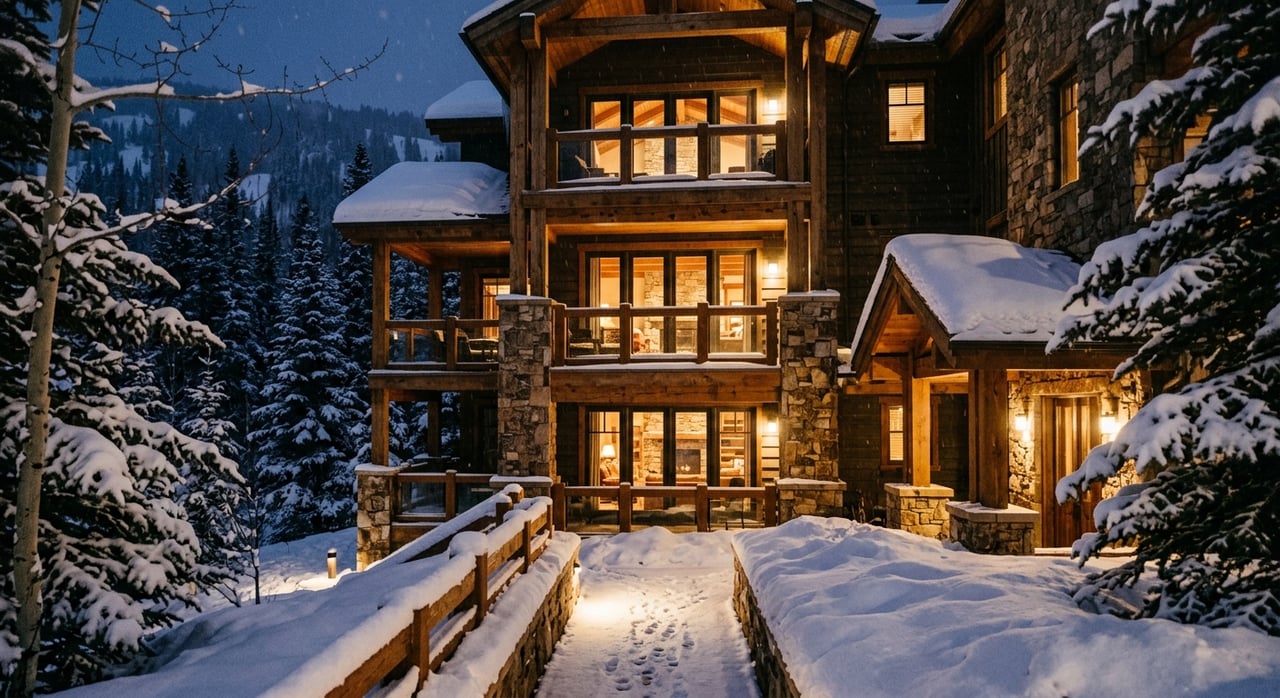
Some higher-end condo-style properties in Mountain Village add another layer of convenience. Resort-style features such as ski valet, pools, spas, concierge-style services, and immediate ski access are common in parts of the luxury inventory.
For many second-home buyers, that means less friction and less hands-on management. You are often trading private space for a more streamlined ownership experience.
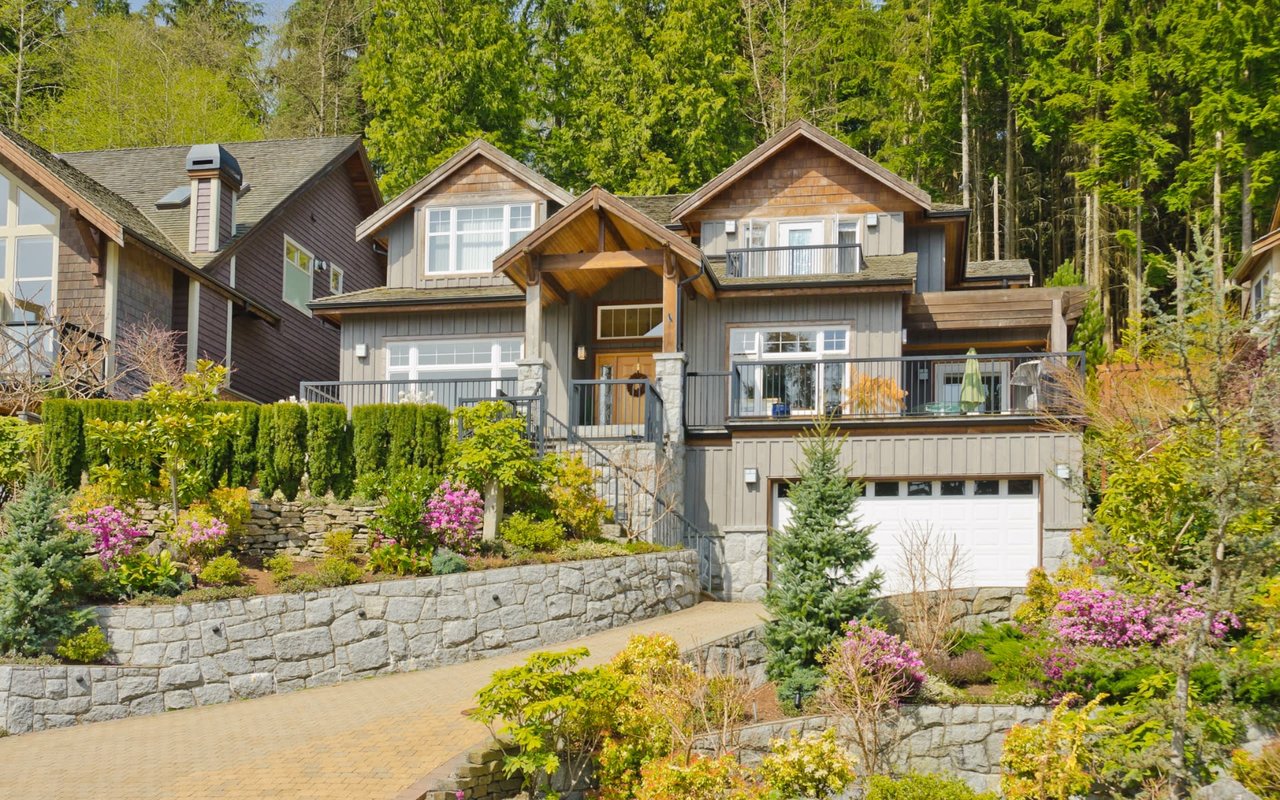
A ski-in or ski-in/ski-out home usually appeals to buyers who want a more private mountain setting. In practical terms, detached-home ownership often means more room for guests, more separation from neighbors, and a more residential feel.
That can be a major advantage if you picture long stays, multigenerational visits, or a home that feels like a retreat rather than a lock-and-leave base. It may also be the better fit if your priority is direct slope access and a quieter ownership experience.
The tradeoff is that you are usually giving up some shared services and some convenience. Compared with a condo building, a detached ski home is more likely to require hands-on oversight, from routine maintenance to weather-related care.
In coach-style terms, this decision comes down to your daily priorities. If you want slope-first living and privacy, a house may be worth the added responsibility.
In Telluride, labels can be misleading. A property called a condo may live very differently depending on the building, services, parking, and zoning.
Mountain Village zoning distinguishes among several unit types, including efficiency lodge, hotel efficiency, lodge, single-family condominium, and single-family uses. It also applies different parking and density standards to condo-style and single-family uses.
That means your real question should be more specific. You want to know how the property is designated, what kind of access it offers, how it is managed, and what uses are allowed.
This is especially important if you plan to use the property part-time or explore rental income. In Telluride, rental flexibility depends on the building and zone, not just on whether a listing is marketed as a condo or a house.
One of the clearest differences between a condo and a detached home is how maintenance is handled. In a common interest community, Colorado guidance says the association is generally responsible for maintenance, repair, and replacement of common elements, while the owner is responsible for the unit itself.
That structure can make condo ownership feel more hands-off on a daily basis. It can also mean regular assessments and possible special assessments used for maintenance, landscaping, insurance, legal fees, registration fees, and reserves.
The flip side is shared governance. A condo often comes with HOA rules, shared decision-making, and less privacy than a detached home.
With a ski-in home, you may have more control and more separation, but you are also likely taking on more direct responsibility. For some buyers, that tradeoff is exactly the point. For others, it becomes a burden over time.
If you plan to rent the property at all, this should be one of your first filters. In the Town of Telluride, a short-term rental license is required before a property can be advertised or rented.
The Town of Telluride also sets important limits in the Residential Zone. Short-term rentals there are capped at 29 nights per year and 3 separate rentals per year, and long-term rentals in that zone are also limited to 3 per calendar year.
The town requires annual disclosures and monthly tax remittance through Rentalscape. It also states that it has no tax agreements with Airbnb, VRBO, or similar platforms, and the total short-term rental tax burden for non-hotel-type rentals is 17.22%.
There is another detail buyers sometimes miss. Telluride says short-term rental licenses cannot be transferred to a new owner, so if a property sells, the license must be closed and a buyer cannot assume it will carry over.
This is why a disciplined buying process matters. Before you get attached to a property, confirm what the zoning allows and how the current building or property use fits your ownership plan.
A common assumption is that condos are always far less expensive than homes. In Telluride, the reality is more layered.
A recent local MLS snapshot for the Town of Telluride reported 2025 median sold prices of $992,000 for studio and one-bedroom condos, $1.7 million for two-bedroom condos, $3.36 million for three-bedroom condos, and $5.5 million for four-bedroom condos. In the same snapshot, single-family medians were $3.92 million for two- to three-bedroom homes, $4.5 million for four-bedroom homes, and $13.15 million for five-bedroom-and-up homes.
The Q1 2026 asking-price snapshot showed a similar ladder. In the Town of Telluride, median asking prices were about $1.923 million for two-bedroom condos, $2.363 million for three-bedroom condos, $8.395 million for four-bedroom homes, and $12.485 million for five-bedroom-and-up homes.
In Mountain Village, median asking prices were about $2.673 million for two-bedroom condos, $3.5 million for three-bedroom condos, $5.2 million for four-bedroom condos, $6.799 million for four-bedroom homes, and $11.9 million for five-bedroom-and-up homes.
The takeaway is simple. High-end condos can overlap with lower-end detached homes, but the top detached ski homes move into a much higher price band.
In Telluride, resale value is usually driven by more than the condo-versus-house label. Location, building quality, access, bedroom count, view corridor, storage, garage space, and whether the property has true ski access all play a role.
For condos, resale tends to be more building-specific and driven by close comparisons within the same project or peer inventory. Amenities, HOA health, and exact walkability can all affect how a property competes.
For detached ski homes, buyers often focus more heavily on land, privacy, views, storage, and true slope adjacency. That can create a different resale dynamic, especially at the top end of the market.
If you are thinking ahead to resale, avoid making the decision in the abstract. Focus on the exact property and how it stands within its own micro-market.
Purchase price is only part of the ownership picture. In the Town of Telluride, there is a 3% real estate transfer tax on sales within the town and Sunset Ridge, which can materially affect your closing-cost planning.
San Miguel County assessor guidance also notes 2025 residential assessment rates of 7.05% for schools and 6.25% for other local governments. That is not the full property tax bill, but it is a reminder that both condos and houses come with ongoing carrying costs that should be modeled early.
For condos, carrying costs may lean more heavily on HOA dues and assessments. For homes, costs may tilt more toward direct maintenance, snow management, and property-specific care.
A smart decision comes from comparing the full ownership picture, not just the list price. That includes taxes, transfer costs, HOA structure, maintenance needs, and rental limitations.
If you feel stuck, use this lens to narrow the choice.
In a market like Telluride, the best choice is rarely the one that sounds better on paper. It is the one that fits how you actually plan to live, visit, host, and hold the property over time.
If you want a coach-style approach to sorting through Telluride luxury options, from walkable condos to private mountain homes, connect with Eric B Roark for clear guidance and a disciplined buying strategy.
August 20, 2026
August 13, 2026
August 6, 2026
July 23, 2026
July 16, 2026
July 9, 2026
July 9, 2026
July 2, 2026
June 25, 2026
With Eric strategic partnerships, he can provide service with Commercial, Ranch, Residential or Resort. Let him know how he can provide service to you. Durango is truly the end of the Rainbow.